The key principle: limescale is mostly calcium carbonate, which mild acids dissolve. White vinegar (about 5% acetic acid) and citric acid both work. Give the acid time instead of scrubbing hard, rinse well, then dry the surface. Never use acids on marble or other natural stone, and never mix descalers with bleach.
What You Are Dealing With
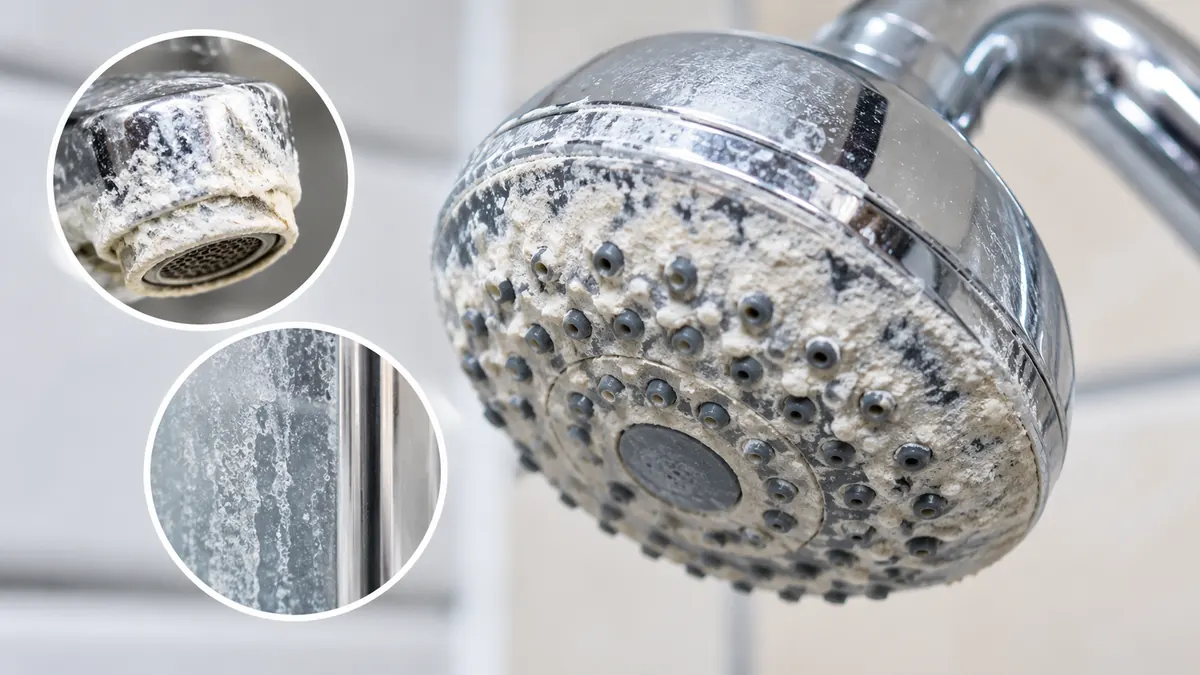
Limescale forms when hard water evaporates or is heated and leaves calcium carbonate behind: the white crust on faucets, shower heads and kettles, and the spots on glass. Soap scum is different. It forms when soap reacts with calcium and magnesium and leaves a gray, greasy film on tubs, tiles and shower doors. Most bathrooms have both, layered together, which is why a two-step clean (acid for scale, then a degreasing cleaner or dish soap for scum) often works better than either alone.
Safety First
Never mix limescale removers, including vinegar, with bleach. The New Jersey Department of Health warns that mixing bleach with acids such as lime, calcium and rust removers can release toxic gases, and Health Canada advises never mixing any cleaning product with household bleach. If you have used a bleach cleaner in a toilet or shower, rinse thoroughly with water and ventilate before using an acid. Wear gloves for anything stronger than vinegar, and keep products in their original labeled containers.
Quick Methods by Surface
- Shower head: tie a bag of white vinegar around it so the nozzles are submerged, leave about an hour (longer for heavy scale, shorter for specialty finishes), then run hot water and rub the nozzles. Remove any filter cartridge first.
- Glass shower doors: spray undiluted vinegar (a little dish soap helps it cling), wait 10 to 15 minutes, scrub with a non-scratch sponge, rinse and squeegee. Spots that never shift may be etching, which cleaning cannot reverse. Full steps: hard water stains on glass.
- Kettle: boil half vinegar, half water (or about 1 tablespoon of citric acid in 500 ml of water), let it sit 20 to 60 minutes, rinse, then boil and discard plain water.
- Toilet: make sure no bleach is in the bowl, lower the water level, cover the ring with vinegar or citric acid solution for several hours, then scrub.
- Faucets: wrap in vinegar-soaked paper towels for 15 to 30 minutes, scrub with an old toothbrush and rinse. Check the maker's care guide for brass, matte or colored finishes.
- Washing machine and dishwasher: follow the manual. Bosch, for example, advises descaling washing machines every three to six months with a tested descaler.
- Marble, granite, travertine: no acids at all. Use a pH-neutral stone cleaner and dry the surface after use.
Step-by-step instructions for 14 surfaces are in our complete limescale removal guide.
Tools That Make It Easier
A few cheap tools save a lot of scrubbing: a spray bottle kept filled with vinegar, a squeegee for shower glass, non-scratch sponges, an old toothbrush for faucets and grout, zip-top bags and rubber bands for soaking shower heads, and rubber gloves. Microfiber cloths dry surfaces without leaving lint, which helps stop new spots from forming.
Cleaning Products for Hard Water
| Product | Best For | Watch Out For |
|---|---|---|
| White vinegar | Shower heads, glass, kettles, everyday scale | Smell; slow on thick scale; not for natural stone |
| Citric acid powder | Kettles, coffee makers, toilets | Not for natural stone; check appliance manuals |
| CLR Calcium, Lime and Rust | Heavy buildup, rust stains | Label restricts natural stone, colored grout, painted or coated surfaces, brass, copper and aluminum |
| Lime-A-Way | Bathroom scale and toilets | Follow the label surface list; spot test |
| Carbona Limescale Remover | Glass, sinks and faucets | Follow the label surface list |
Start with the mildest option that works and spot test on a hidden area first.
Removing Soap Scum
Soap scum is a mix of soap residue, body oils and hardness minerals, so it responds to two kinds of cleaner. Acid loosens the mineral part; a degreaser such as dish soap lifts the greasy part. A simple approach: spray a mix of warm vinegar and a little dish soap, leave it 10 to 15 minutes, scrub with a non-scratch brush or sponge, and rinse thoroughly. Switching from bar soap to a liquid body wash, which forms less scum, also helps in hard water.
A Cleaning Schedule for Hard Water Homes
| Task | How Often |
|---|---|
| Squeegee or wipe shower glass | After each shower |
| Wipe faucets and sink dry | Daily or as you go |
| Vinegar spray on glass and tile | Weekly |
| Descale kettle | When you see white flakes |
| Soak shower head and clean aerators | Every few months |
| Descale coffee maker, washer, dishwasher | As the manual advises |
The harder your water, the more often you will need each task. If the schedule feels endless, that is the strongest sign a softener would pay off in time saved.
How to Prevent Limescale and Hard Water Buildup
- Dry as you go. Scale forms when water evaporates, so a 30-second squeegee of shower glass after each shower prevents most spots.
- Use rinse aid in the dishwasher to reduce spots on glasses.
- Descale on a schedule rather than waiting for thick crust: light scale comes off in minutes.
- Treat the water. A water softener removes the calcium and magnesium that form scale, which is the only way to stop it at the source.